
Mice are one of the most frustrating pest problems homeowners face because they often stay hidden where you can’t see them. While you might not spot a mouse running across your floor, that doesn’t mean they aren’t active inside your home. In many cases, mice live and nest inside walls, ceilings, and other enclosed spaces, quietly causing damage and multiplying over time.
If you suspect something is off in your home, it’s important to recognize the early warning signs. Identifying a mouse problem early can save you from a much larger infestation and more costly repairs down the line. This guide will walk you through the most common signs that mice may be living inside your walls and what you should do about it.
Walls provide everything mice are looking for. They offer warmth, protection from predators, and easy access to food sources nearby. Once mice find a way into your home, they often travel through wall cavities using wiring paths, insulation gaps, and structural openings.
Because they stay hidden, many infestations go unnoticed for weeks or even months. By the time homeowners realize there’s an issue, mice have often already established nesting areas and expanded their activity throughout the home.
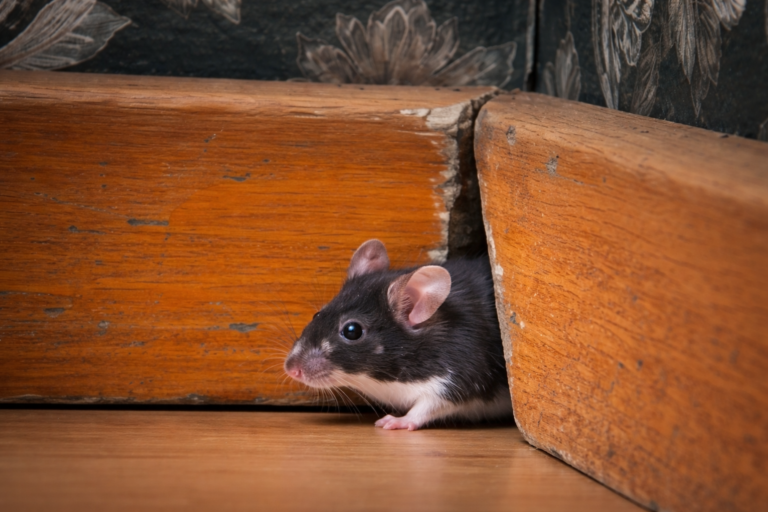
One of the earliest and most common signs of mice in your walls is sound. Homeowners often describe it as scratching, scurrying, or light tapping coming from behind drywall.
These noises are typically more noticeable at night when the house is quiet and mice are most active. You might hear movement in walls, ceilings, or even under the floor. The sounds may seem random at first but often follow consistent patterns as mice travel along the same routes. If you hear activity in the same area repeatedly, it’s a strong indicator that mice are nesting nearby.
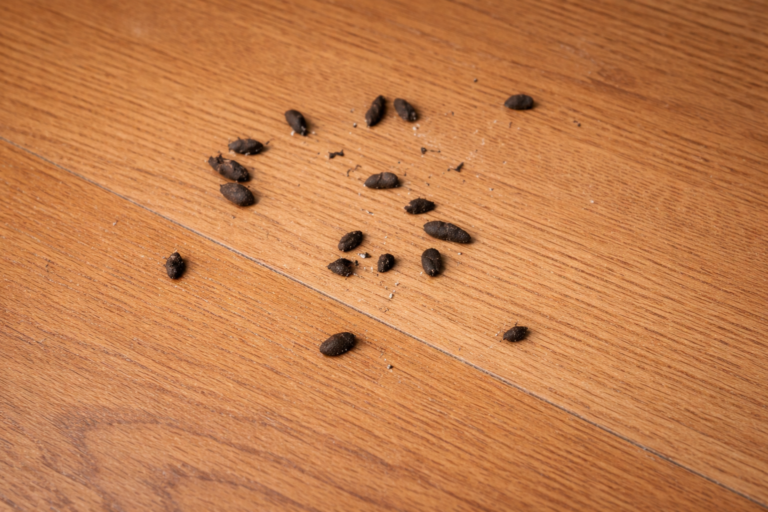
Even if mice are living inside your walls, they still need to come out to search for food. When they do, they leave behind droppings.
Mouse droppings are small, dark, and shaped like grains of rice with pointed ends. They are commonly found along baseboards, inside cabinets, under sinks, and near food storage areas.
Finding droppings in multiple areas usually means there is ongoing activity behind the scenes. Fresh droppings are darker and slightly moist, while older ones appear dry and crumbly.
Mice have strong teeth that continuously grow, which means they are constantly chewing. This behaviour helps them access food and create entry points, but it also leads to damage inside your home.
You may notice chewed food packaging, damaged cardboard, or bite marks along baseboards and cabinets. In more serious cases, mice will chew through wiring inside walls, which can become a safety hazard. If you are seeing new damage appearing without explanation, it could be coming from activity inside your walls.
A mouse infestation often comes with a distinct smell. This odour is caused by urine, droppings, and nesting materials accumulating in enclosed spaces.
The smell is often described as musty or slightly ammonia-like. It may be more noticeable in certain rooms or near specific walls where activity is concentrated. As the infestation grows, the odour tends to become stronger and harder to ignore. In some cases, homeowners only realize there is a problem once the smell becomes persistent.
Mice tend to follow the same paths as they move through your home. As they travel along baseboards and wall edges, their bodies leave behind greasy residue.
These marks appear as faint smudges or dark streaks along walls, especially in areas where mice are frequently active. Over time, these marks can become more noticeable as traffic increases. Seeing these trails is a sign that mice are not only present but actively moving between nesting and feeding areas.
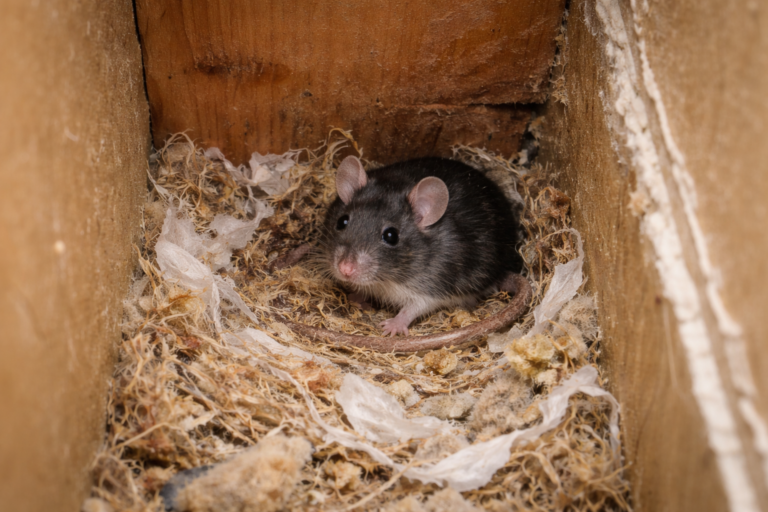
Mice build nests using soft materials such as insulation, paper, fabric, and even bits of packaging. While most nests are hidden inside walls, you may start to notice shredded materials appearing in visible areas.
This can include torn paper in storage spaces, disturbed insulation in basements, or small piles of debris in corners. If you are finding materials that look like they’ve been gathered or chewed, it could indicate that mice are nesting nearby within your walls.
Mice are nocturnal, which means they are most active after dark. If you notice signs of movement or hear activity primarily at night, it’s another strong indicator of a mouse problem.
You might hear them moving between walls, ceilings, and floors, especially in quieter areas of the home. Some homeowners also report pets becoming alert or focused on certain walls, which can be another clue. Nighttime activity combined with other signs almost always points to mice living within the structure of the home.
Mice are not just a nuisance. They can cause real damage and pose health risks if left untreated. Inside walls, mice can chew through electrical wiring, increasing the risk of fire. They can also damage insulation and create unsanitary conditions through droppings and urine.
Because they reproduce quickly, what starts as a small issue can grow into a large infestation in a short period of time. Addressing the problem early is always the best approach.
If you recognize any of these signs, it’s important to act quickly. Waiting too long allows the infestation to grow and spread throughout the home.
While traps can help reduce visible activity, they often do not solve the root of the problem. Mice living inside walls require a more thorough approach that includes identifying entry points and eliminating the entire population. This is where professional rodent control becomes essential.
At AVID Pest, we specialize in identifying and eliminating mouse infestations at the source. Our process starts with a detailed inspection to determine where mice are active and how they are entering your home.
We use targeted treatments, including professional-grade traps and secure rodenticide stations, placed in key areas to eliminate the population efficiently. Just as importantly, we assess the exterior of your home to identify entry points and provide recommendations for sealing them. Our goal is not just to remove the mice you are noticing but to stop the problem from returning.
If you are hearing scratching in your walls or noticing any of the signs mentioned above, don’t wait for the problem to get worse. The sooner you take action, the easier it is to eliminate the infestation.
Contact AVID Pest today to schedule your inspection and treatment. Our team is ready to provide fast, effective mouse control and help you get your home back to normal.
Looking for the best pest control service in Ontario? At Avid Pest Services, our exterminators are skilled to prevent any kind of pest from your residential and commercial area in a timely and efficient manner. Call today to get a free quote.
2023 Avid Pest Services. All Rights Reserved.