
Wasps are one of the most common pest problems homeowners face during the warmer months. While a single wasp flying around your backyard may not seem concerning, frequent activity around your home often indicates that a nest is nearby. Left untreated, wasp colonies can grow rapidly throughout the spring and summer, increasing the risk of painful stings and making it difficult to enjoy your outdoor spaces.
Many homeowners attempt to deal with wasps themselves using sprays purchased from hardware stores. While these products may eliminate a few visible insects, they often fail to completely solve the problem. Depending on the location of the nest and the species involved, DIY treatment can also be dangerous.
If you’re wondering how to get rid of wasps around your home, understanding where they nest, why they return, and when to call a professional can help you protect both your family and your property.
Your home provides many of the resources wasps need to survive. Sheltered areas protect developing nests from rain and predators, while gardens, flowering plants, outdoor garbage bins, and nearby water sources provide food for adult wasps. During spring, a single fertilized queen begins building a new nest. As more workers hatch throughout the season, the colony grows quickly.
By late summer, some wasp nests contain hundreds or even thousands of individuals. Homes with numerous covered areas, roof overhangs, sheds, decks, fences, and trees often provide ideal nesting locations.
Knowing where wasps prefer to nest can help homeowners identify problems early. Paper wasps often build open umbrella-shaped nests beneath soffits, porch ceilings, railings, patio furniture, and eaves. These nests remain visible and are relatively easy to spot before they become large.
Yellowjackets frequently choose concealed locations. Their nests may be found inside wall cavities, roof voids, sheds, crawl spaces, or underground in abandoned rodent burrows. Because these nests are hidden, homeowners sometimes discover them only after disturbing the area.
Bald-faced hornets typically construct large football-shaped paper nests suspended from tree branches, shrubs, or occasionally attached to buildings. Regular inspections around your property during spring can help detect nests before colonies reach their maximum size.
Sometimes the nest itself is hidden, but the wasps reveal its location. You may notice frequent wasp activity around the same section of your home each day. Wasps flying repeatedly into a small gap beneath siding, behind soffits, around vents, or under roof shingles often indicate a concealed nest inside the structure.
Increased wasp activity around decks, patios, sheds, fences, or gardens may also suggest that a nearby colony is actively foraging. If dozens of wasps are consistently entering and leaving the same location, there is a good chance a nest is present.
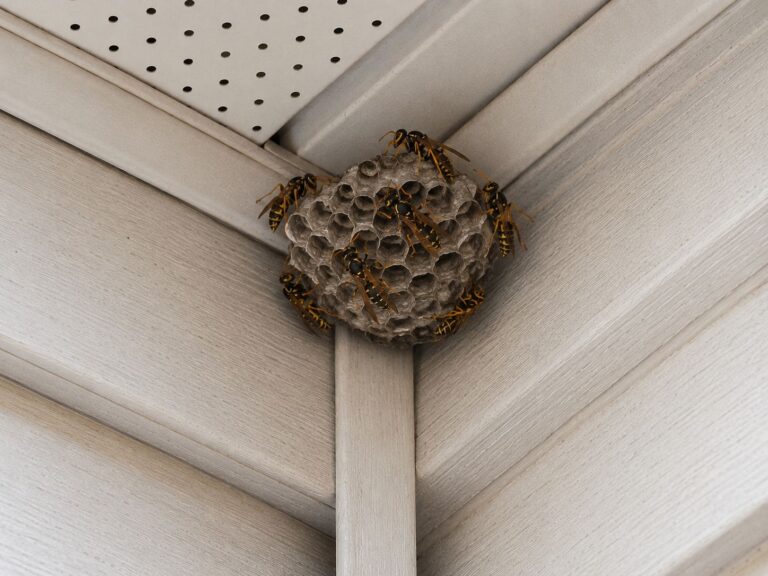
Many homeowners purchase aerosol sprays hoping for a quick solution. Although these products may kill individual wasps on contact, treating an active nest carries significant risks. Disturbed wasps aggressively defend their colony and may attack in large numbers. Unlike honeybees, wasps can sting multiple times. A person attempting to spray a nest may quickly find themselves surrounded by hundreds of defensive insects.
Hidden nests create an additional challenge. Spraying the visible entrance rarely reaches the entire colony when the nest extends deep inside a wall or roof cavity. Improper treatment can also cause surviving wasps to seek alternate exit routes, occasionally leading them further into the home.
The time of year has a significant impact on wasp control. Spring nests are generally much smaller because only the queen and a handful of workers are present. Eliminating nests early prevents colonies from growing into much larger infestations later in the season.
By mid to late summer, nests may contain several hundred or even thousands of wasps. Larger colonies are far more defensive and require greater care during removal. Addressing wasp activity as soon as it is noticed usually results in safer and more effective treatment.
If wasps are entering cracks around siding, soffits, brickwork, or rooflines, the nest may be inside your home. Many homeowners mistakenly spray the outside opening without realizing the nest is hidden behind the wall. This often kills only the workers at the entrance while leaving the colony intact.
Professional treatment targets the entire nest while minimizing the chance of surviving wasps relocating deeper into the structure. After treatment is complete and all activity has stopped, entry points can often be sealed to discourage future nesting.
While no prevention method is perfect, reducing attractive nesting sites can significantly lower your risk of future infestations. Inspect your home each spring for small nests beneath soffits, decks, railings, window frames, and outdoor furniture. Early removal by a professional is much easier than dealing with a mature colony later in the season.
Keep garbage bins tightly sealed and clean away food residue from outdoor dining areas. Fallen fruit should be removed promptly, as fermenting fruit attracts many wasp species. Maintaining landscaping can also help. Pruning shrubs and trimming tree branches reduces sheltered areas where queens may begin building nests. Repairing damaged soffits, siding, vents, and fascia boards helps eliminate hidden spaces where colonies may establish themselves.
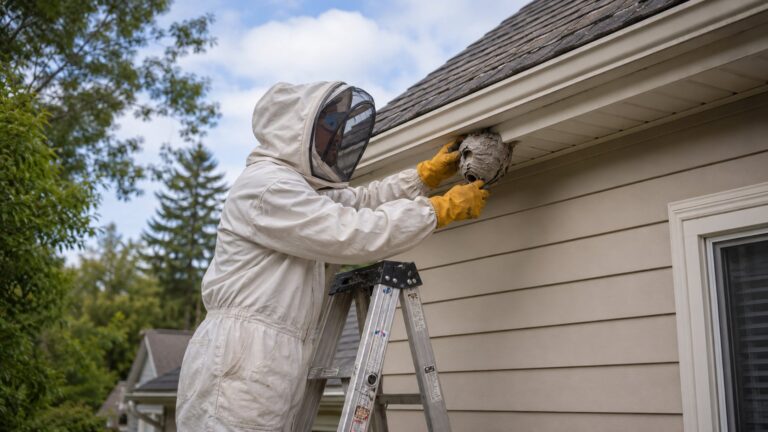
Professional wasp control begins by identifying the species involved and locating the entire nest. Visible nests can often be treated directly using specialized products that eliminate the colony quickly. Hidden nests require different treatment strategies depending on their location inside the structure.
Professional equipment allows technicians to safely reach high rooflines, second-storey soffits, and difficult access points that are dangerous for homeowners. Once the colony has been eliminated, homeowners can safely remove abandoned nests if necessary. In situations involving structural nests, recommendations may also be provided to reduce the likelihood of future activity.
Professional wasp control focuses on eliminating the colony rather than simply reducing visible activity. Experienced technicians understand wasp behaviour and know where colonies commonly hide. They use products specifically designed for wasp control and apply them in a way that reaches the nest while reducing risk to occupants.
Attempting to remove a mature colony without proper equipment can be dangerous and often leads to incomplete treatment. Professional service provides a safer and far more reliable solution.
Some homeowners hope wasps will simply leave on their own. While colonies naturally decline in late fall after cold temperatures arrive, active nests remain dangerous throughout the summer. As colonies continue growing, the number of defensive workers increases substantially.
Large nests create greater risks for children, pets, visitors, and anyone performing outdoor maintenance. Allowing an active nest to remain throughout the season usually results in more wasps around the property and a higher chance of accidental encounters.
At AVID Pest Services, we provide professional wasp removal services designed to eliminate active colonies quickly and safely. Whether the nest is attached beneath a soffit, hidden inside a wall cavity, located under a deck, or built high along the roofline, our technicians have the equipment and experience to treat it effectively.
We focus on eliminating the entire colony while minimizing the risks associated with DIY removal. Our goal is to restore your outdoor spaces so you can safely enjoy your property again.
If you’ve noticed increasing wasp activity around your home or have discovered an active nest, don’t wait for the colony to grow larger. Early treatment is safer, more effective, and helps prevent wasps from becoming a bigger problem later in the season.
AVID Pest Services provides professional wasp removal services for homeowners dealing with paper wasps, yellowjackets, hornets, and other stinging insects. Our experienced technicians can safely remove active nests and help protect your property throughout wasp season.
Contact our team to schedule your wasp nest removal service and enjoy a safer, wasp-free home.
Looking for the best pest control service in Ontario? At Avid Pest Services, our exterminators are skilled to prevent any kind of pest from your residential and commercial area in a timely and efficient manner. Call today to get a free quote.
2023 Avid Pest Services. All Rights Reserved.