
As temperatures begin dropping in Ontario, homeowners often start preparing their properties for winter. Outdoor furniture gets stored away, heating systems are turned on, and windows remain closed for longer periods. Unfortunately, fall is also a time when mice become a growing concern for homeowners.
While mice can be active throughout the year, cooler weather often encourages them to seek warm, sheltered environments. Homes provide everything they need to survive the winter, including warmth, food, water, and protection from predators. Once mice find their way indoors, they can settle into wall voids, basements, attics, garages, and other hidden areas. Their presence may go unnoticed until homeowners begin hearing scratching noises, discovering droppings, or finding damaged food packaging.
Fall mouse prevention is one of the best ways to reduce the likelihood of a rodent infestation during the colder months. By understanding how mice enter homes, what attracts them, and which warning signs to watch for, homeowners can take practical steps to protect their properties before winter arrives.
Mice are well adapted to surviving outdoors, but colder temperatures can make indoor environments especially attractive. As fall progresses, outdoor conditions begin changing. Food sources may become less accessible, vegetation starts dying back, and temperatures become increasingly unpredictable.
Homes provide a stable environment where mice can find shelter from cold weather and access food throughout the winter. A heated basement, insulated attic, or protected wall cavity can provide suitable nesting conditions. Even garages and sheds may offer enough shelter to encourage mice to remain nearby.
In Ontario, mouse activity around residential properties often becomes more noticeable during September, October, and November as temperatures begin dropping. However, mice do not necessarily wait until winter to enter a home. Some may already be living inside before homeowners notice any evidence. This is why beginning prevention efforts during early fall is particularly important.
One of the biggest misconceptions about mice is that they need a large opening to enter a building. In reality, mice can squeeze through surprisingly small gaps. A house mouse may be able to enter through an opening approximately 6 mm wide, or about the diameter of a pencil. This means even minor gaps around a home’s exterior can potentially provide access.
Common mouse entry points include openings around utility lines, plumbing penetrations, foundation cracks, damaged door seals, garage door gaps, and spaces around exterior vents. Mice may also enter through poorly sealed areas where different building materials meet. Once inside, they can travel through wall cavities, along floor joists, and around plumbing or electrical openings to reach other areas of the home. A small opening near the foundation may eventually allow mice to access a basement, kitchen, or attic.
The foundation is one of the most important areas to inspect during fall mouse prevention. Mice frequently travel along the exterior walls of buildings, particularly where vegetation, landscaping, or other materials provide cover.
Walk around your home and look for visible cracks, gaps, or openings near ground level. Pay particular attention to locations where pipes, cables, and utility lines enter the building. These penetrations sometimes have small spaces around them that can provide access. Foundation vents, basement windows, and areas where siding meets the foundation should also be examined. Not every crack will be large enough for a mouse to enter, but even small openings deserve attention.
Appropriate rodent-resistant materials can be used to close potential entry points. Metal mesh, properly installed flashing, and other durable exclusion materials may be necessary depending on the opening. Expanding foam alone is generally not a reliable solution because mice may chew through it.
Doors are another common area where mice may gain access. Over time, weatherstripping can become worn, damaged, or compressed. Small gaps may develop beneath exterior doors, particularly around garages, side entrances, and basement access doors. A mouse does not need much space to squeeze underneath a poorly sealed door. Inspect door sweeps and weatherstripping for visible damage. If light can be seen beneath a closed exterior door, the opening may deserve closer attention.
Garage doors are especially important because they often have large rubber seals that can deteriorate with age. Mice entering a garage may find additional openings leading into the home through shared walls, utility penetrations, or unfinished areas. Keeping garage doors closed when not in use can help reduce opportunities for entry.
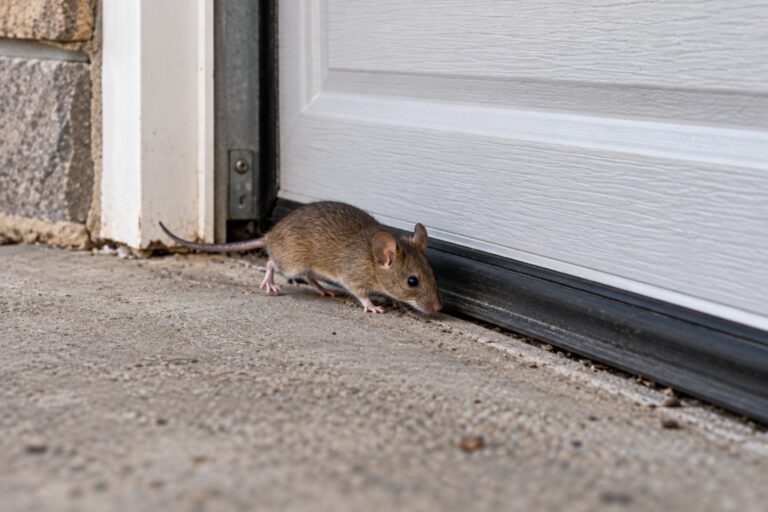
Garages often provide ideal conditions for mice. They are typically quieter than living spaces, contain numerous hiding places, and may offer access to food or nesting materials. Cardboard boxes, stored clothing, gardening supplies, insulation, and other materials can provide sheltered nesting locations. Some homeowners also store birdseed, grass seed, pet food, or other products in their garages. These items can attract mice if they are not stored securely.
During fall, organize stored belongings and reduce unnecessary clutter. Whenever possible, keep food-related products in durable containers with tightly fitting lids. Inspect the garage perimeter for droppings, gnaw marks, and signs of nesting. If mice are already active in the garage, addressing the problem before winter may help prevent them from moving farther into the house.
Food availability plays an important role in whether mice remain around a property. Mice are opportunistic feeders and can survive on many different food sources. They may be attracted to pantry products, pet food, birdseed, garbage, and food debris. Inside the home, kitchens and pantries deserve particular attention. Store cereals, rice, flour, pasta, and other dry goods in secure containers. Avoid leaving food packaging open, especially in lower cupboards where mice may travel. Crumbs and spills should be cleaned promptly. Pet food should also be stored securely rather than left in open bags on the floor.
Outdoors, garbage containers should have properly fitting lids. Spilled birdseed and accessible compost materials may also encourage rodent activity. Reducing available food does not guarantee that mice will stay away, but it makes your property less attractive.
Landscaping can unintentionally provide shelter for mice. Dense shrubs, overgrown vegetation, tall grass, and accumulated leaves create protected areas where mice can travel without being easily exposed to predators. When vegetation grows directly against a house, it may provide convenient cover near potential entry points.
Fall is a good time to trim overgrown plants and remove unnecessary debris from around the foundation. Pay particular attention to areas beneath decks, around sheds, and near basement windows. Woodpiles should be stored away from the house when practical and kept off the ground. Avoid allowing discarded materials, construction debris, or unused equipment to accumulate along exterior walls. Keeping the perimeter clear makes it easier to inspect for openings and recognize signs of rodent activity.
Attics can provide excellent shelter for mice during colder weather. Insulation offers nesting material and protection, while enclosed attic spaces can provide a relatively undisturbed environment. Mice may enter through gaps around rooflines, soffits, vents, or other structural openings. Once inside, they can create nesting areas within insulation or along structural framing.
Homeowners may begin noticing scratching or scurrying sounds overhead, particularly during the evening or overnight. Other signs include droppings, disturbed insulation, nesting debris, and evidence of gnawing. Mice can also contaminate attic insulation with urine and feces.
If you suspect activity in your attic, avoid disturbing contaminated materials without appropriate precautions. Professional rodent control can help determine whether mice are present and what treatment or exclusion work may be needed.
Basements are another common location for mouse activity. These spaces often contain plumbing penetrations, foundation openings, storage areas, and relatively quiet corners where mice can hide. Unfinished basements may also provide access to floor joists and wall cavities. Mice can travel along these concealed routes without regularly entering open living areas. Crawl spaces may offer similar conditions, particularly when openings around the foundation provide access from outdoors.
During fall, inspect accessible basement areas for droppings, gnaw marks, and nesting materials. Pay attention to locations around water heaters, utility equipment, storage shelves, and exterior walls. If you discover evidence of mice, there may be additional activity elsewhere in the building.
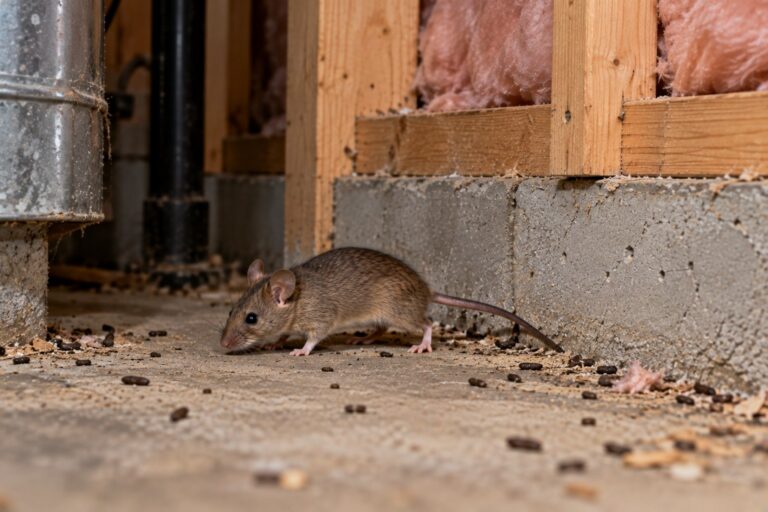
Even with preventive maintenance, mice may still find their way indoors. Recognizing the early signs of an infestation can help you respond before activity becomes more widespread. One of the most common warning signs is mouse droppings. These are typically small, dark, and pellet-shaped. They may appear inside cabinets, beneath sinks, around stored food, or along basement walls.
Scratching noises are another common indication. Homeowners may hear movement inside walls, ceilings, or attic spaces, particularly at night when the house is quiet. Chewed food packaging, damaged cardboard, shredded nesting materials, and gnaw marks around stored belongings can also indicate activity.
In some cases, homeowners may notice an unusual odour associated with rodent urine or nesting areas. Seeing a mouse indoors is an obvious warning sign, but many infestations are discovered through these indirect signs before a live mouse is spotted.
A mouse infestation is more than an inconvenience. Mice can contaminate surfaces and stored materials with droppings and urine. They may also damage food packaging, insulation, cardboard, and other belongings.
Their constant gnawing behaviour can create additional problems. Mice may chew electrical wiring, which can damage electrical systems and potentially create a fire hazard. They can also damage insulation and nesting materials inside walls and attics.
Because mice reproduce quickly under favourable conditions, a small infestation can become more difficult to manage if left untreated. Waiting until winter is well underway may give mice additional time to establish nesting areas inside the property.
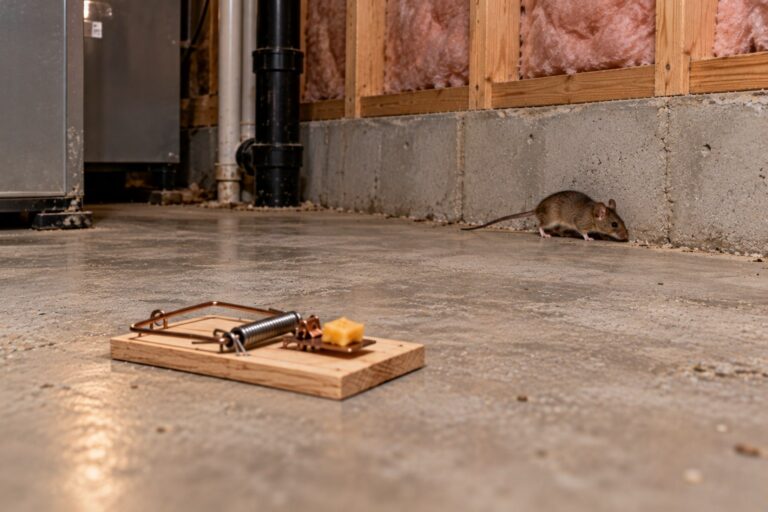
When homeowners discover mice, one of the first things they often try is setting traps. Traps can capture individual mice and may be useful in certain situations, but they do not necessarily address the reason mice entered the property. If openings remain accessible, additional mice may continue entering from outdoors.
Trap placement also matters. Mice commonly travel along walls and protected edges rather than crossing large open spaces. Traps placed in areas without regular mouse activity may be less effective. A homeowner may catch one or two mice and assume the infestation has been eliminated, even though other mice remain hidden. For recurring activity, a more comprehensive approach is often necessary.
Professional mouse control focuses on reducing the active rodent population and identifying conditions that may be contributing to the problem. A pest control technician can assess areas where mice are likely to travel, feed, and nest. Treatment may involve strategically placed rodent bait stations or other appropriate control methods, depending on the property and circumstances. The goal is to address the population rather than simply respond to individual sightings.
At Avid Pest Services, mouse treatments generally take approximately two to three weeks to produce their intended results, although the timeline can vary depending on the severity of the infestation and conditions within the property. Because some rodent control products are slow-acting, mice may continue to be seen during the early stages of treatment. Homeowners should follow the technician’s instructions and avoid moving or interfering with bait stations.
Treatment can help control mice already inside a home, but preventing additional entry is another important part of long-term rodent management. Rodent exclusion involves identifying and sealing potential entry points using appropriate materials. This may include gaps around plumbing, utility penetrations, foundation openings, damaged vents, and other vulnerable areas.
The materials used should be durable enough to resist rodent gnawing. Not every opening can be identified from a quick visual inspection, particularly in older homes or buildings with complicated construction.
It is also important to avoid trapping rodents inside inaccessible spaces through poorly planned sealing. When necessary, exclusion work should be coordinated with an appropriate rodent control strategy.
Some homeowners assume mice will disappear once outdoor temperatures become extremely cold. Unfortunately, mice can remain active throughout winter, especially when they have established themselves inside a heated building.
Indoor conditions may provide enough food, water, and shelter for mice to survive and reproduce regardless of outdoor temperatures. This means a fall infestation can continue well into winter if it is not addressed. Mice may also remain active in garages, sheds, and other sheltered structures.
Winter does not automatically eliminate rodent problems. Taking preventive measures before cold weather arrives is generally easier than discovering an established infestation in the middle of the season.
If you are finding fresh droppings, hearing scratching noises, discovering chewed packaging, or repeatedly seeing mice, it may be time to arrange professional treatment. You do not need to wait until you see multiple mice. Because mice spend much of their time hidden, the number of animals visible inside a home may not reflect the actual extent of the infestation.
Fall is an especially practical time to address these concerns because mice may be actively searching for protected indoor spaces. Scheduling treatment early can help reduce activity before the colder winter months.
Preparing your home for winter should involve more than checking the furnace and putting away outdoor furniture. Inspecting the exterior for rodent entry points, maintaining door seals, organizing storage areas, and removing accessible food sources can all help reduce the likelihood of mouse activity.
These steps are particularly useful during fall when mice may be searching for reliable shelter. Regularly checking basements, garages, attics, and other less frequently used areas can also help you recognize an infestation before it becomes more established. Although no prevention method can guarantee that mice will never enter a home, reducing access and limiting available resources can make a significant difference.
As Ontario temperatures begin dropping, mice may look for opportunities to enter homes, garages, basements, and attics. Once indoors, they can contaminate stored materials, damage insulation, chew wiring, and establish nesting areas that remain active throughout winter. Taking action during fall can help prevent a minor rodent problem from becoming a larger infestation.
Avid Pest Services provides professional mouse control treatments designed to address rodent activity inside residential properties. Our team can help identify areas of concern, target mouse activity, and provide guidance on reducing conditions that may encourage rodents to remain around your home.
If you’re hearing scratching noises, finding mouse droppings, or noticing other signs of rodent activity, don’t wait for winter to arrive. Schedule your mouse treatment with Avid Pest Services and let our team help protect your home.
Looking for the best pest control service in Ontario? At Avid Pest Services, our exterminators are skilled to prevent any kind of pest from your residential and commercial area in a timely and efficient manner. Call today to get a free quote.
2023 Avid Pest Services. All Rights Reserved.