
Finding a wasp nest around your home can quickly turn a relaxing summer day into a stressful situation. Whether the nest is hanging beneath a deck, tucked into the corner of a window, hidden behind siding, or concealed inside a soffit, most homeowners want it gone as quickly as possible. That often leads to an important question: Should you remove a wasp nest yourself or hire a professional pest control company?
DIY wasp removal products are widely available, and small nests can sometimes look simple enough to handle. The challenge is that the visible nest does not always tell you how many wasps are present, how defensive the colony will be, or whether the nest extends into a hidden area of the structure. Approaching an active nest without the right protective equipment or treatment method can quickly result in multiple stings. Professional wasp control focuses on more than simply knocking down the visible nest. The goal is to treat the colony effectively while reducing the risk to homeowners, family members, pets, and anyone else using the property.
Here is what homeowners should know when comparing DIY wasp removal vs professional wasp removal.
Wasps naturally search for sheltered areas where they can establish colonies. Unfortunately, residential properties provide plenty of suitable locations. Depending on the species, wasps may build nests around rooflines, soffits, decks, sheds, window frames, fences, wall cavities, trees, shrubs, and even underground.
Many colonies begin very small in the spring. A queen starts constructing a nest and raises the first generation of workers. As those workers mature, they take over nest construction and food gathering, allowing the colony to expand. By summer, a nest that was barely noticeable a few months earlier may have significant activity around it. The closer that nest is to doors, patios, walkways, play areas, decks, or other frequently used spaces, the greater the chance of an unwanted encounter.
There are countless DIY products marketed for wasp control, including aerosol sprays, traps, powders, and homemade solutions. These products can make wasp removal appear relatively straightforward. The problem is that every infestation is different.
A small exposed nest in an isolated area is very different from a mature colony hidden behind siding or inside a wall. Homeowners may also incorrectly identify the insect they are dealing with, which can result in using an ineffective treatment method. More importantly, wasps actively defend their colonies. Getting close enough to spray, knock down, cover, or otherwise disturb a nest can trigger an immediate response. That risk increases considerably as the colony grows.
Wasps defend their nests when they perceive a threat. Unlike honeybees, many wasps are capable of stinging repeatedly. Disturbing an active colony can therefore result in more than a single sting, particularly if multiple workers respond at once. Attempting to remove a nest while standing on a ladder creates another hazard. A sudden swarm of defensive wasps can cause someone to lose their balance while trying to escape.
People with known allergies to insect venom face an even greater risk and should avoid approaching active nests. Even homeowners without a known allergy can experience painful swelling and other reactions following a sting.
One of the biggest limitations of DIY wasp treatment is accessibility. If you can see an exposed paper nest, it is relatively easy to understand where the colony is located. Hidden nests are much more complicated.
Wasps frequently enter small openings around soffits, siding, vents, rooflines, windows, brickwork, and exterior trim. The opening you see may simply be the entrance to a much larger protected cavity.
Spraying the insects flying around the entrance does not necessarily eliminate the colony inside. This can lead to a frustrating cycle where wasp activity temporarily decreases before returning.
Finding the hole wasps are using and immediately sealing it may seem like a logical solution. In many cases, however, sealing an active entry point before the colony has been eliminated can create additional problems. Wasps already inside the structure may begin searching for another exit.
Depending on where the nest is located, that alternative route could potentially lead deeper into the building or toward interior living spaces. The colony should be properly treated before the opening is sealed. Once activity has stopped and the nest is no longer active, the area can be assessed to determine whether sealing or repairs are appropriate.
Visible nests and structural nests are not always treated the same way. A nest hanging beneath a porch ceiling can usually be seen clearly. A nest behind siding or inside a soffit may be completely inaccessible from the exterior.
Professional pest control technicians can evaluate where wasps are entering and determine an appropriate treatment method based on the location and type of activity. This is especially important when homeowners see dozens of wasps entering and exiting the same small hole but cannot see the actual nest. Repeated traffic through one opening is a strong indication that a colony may be established inside the structure.
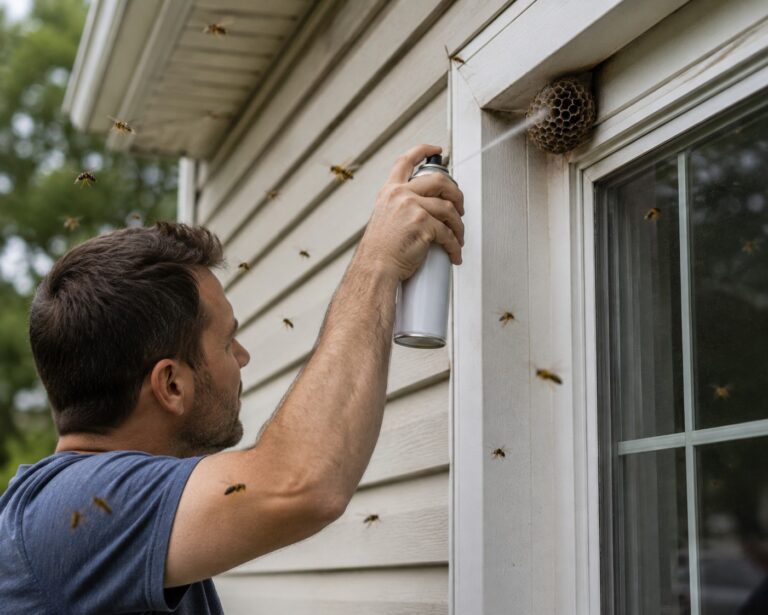
One major advantage of professional wasp control is access to appropriate equipment. Wasps frequently build nests in difficult locations, including high rooflines and tight structural spaces. Pest control technicians can use professional application equipment and protective clothing to approach these areas more safely.
This is particularly valuable for nests located around soffits and elevated sections of a house. Trying to reach a nest from an unstable ladder while defensive wasps are flying nearby is an unnecessary risk. Professional treatment allows the problem to be addressed without placing the homeowner directly beside the colony.
Effective wasp control is about eliminating the colony rather than simply killing the wasps that happen to be visible at the time. Wasps constantly leave the nest to search for food and nesting resources. This means many workers may be away from the colony during treatment.
A professional approach takes the nest location and wasp behaviour into account so the treatment can address active insects as they interact with the nesting area. For structural nests, treatment can be directed toward the entrance being used by the colony rather than randomly spraying the exterior of the house.
Not every flying insect around your home requires the same treatment. Paper wasps, yellowjackets, hornets, carpenter bees, and honeybees can behave differently and establish nests in different locations. Correct identification helps determine the safest and most appropriate response.
Paper wasps frequently construct exposed comb-like nests beneath protected surfaces. Yellowjackets commonly establish concealed nests underground or inside structural cavities. Other species may behave differently altogether. A pest control technician can assess the activity before determining the best way to address it.
There are certain situations where homeowners should be especially cautious about attempting removal themselves. Large nests, concealed nests, elevated nests, and colonies near frequently used entrances present additional hazards. The same applies when someone in the household has a known sensitivity to stings.
Heavy activity is another warning sign. If numerous wasps are continuously entering and leaving one location, the colony may be well established. Approaching that area and spraying it without adequate protection can provoke a strong defensive response. Professional service becomes increasingly valuable as the nest grows or becomes more difficult to access.
Wasp activity often becomes much more noticeable later in the season. Colonies that began with a single queen in spring have had months to expand. By late summer, there are significantly more worker wasps searching for food and defending the nest.
At the same time, wasps become increasingly attracted to sugary foods and drinks. Patios, garbage bins, recycling containers, barbecues, fruit trees, and outdoor dining spaces can become particularly active. This combination of larger colonies and increased foraging activity makes late summer one of the most common times for homeowners to discover wasp problems. It also makes DIY nest removal more hazardous than it may have been earlier in the season.
Professional treatment can eliminate an existing nest, but homeowners can also make their properties less attractive to future colonies. Keep outdoor garbage containers closed and clean spills from recycling bins. Remove fallen fruit beneath trees and avoid leaving sugary beverages or food outside for extended periods.
During spring and early summer, occasionally inspect sheltered locations around your property. Pay particular attention to porch ceilings, soffits, sheds, deck railings, patio structures, and window frames. You should also watch for repeated wasp traffic around small exterior openings. Finding an entry point early may allow a problem to be addressed before the colony becomes much larger.
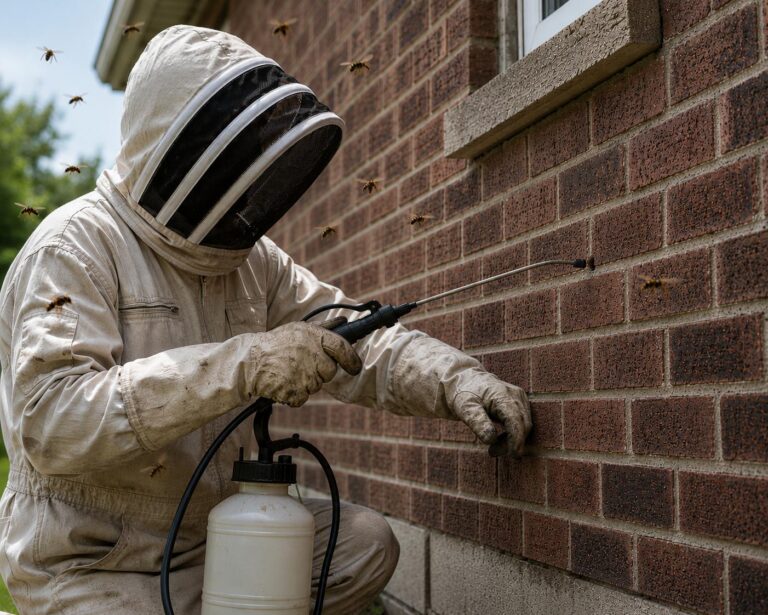
The right choice depends on the location, size, and accessibility of the nest, but homeowners should always prioritize safety. DIY products may kill individual wasps, but they can be unreliable for established or concealed colonies. They also require homeowners to approach an insect that may aggressively defend its nest.
Professional wasp removal provides the benefit of proper identification, protective equipment, specialized treatment products, and experience dealing with colonies in difficult locations. If you’re unsure where the nest is located, see heavy wasp activity, or have a colony established around your home’s structure, professional treatment is generally the safer option.
At Avid Pest Services, we provide professional wasp removal for homeowners dealing with active nests around their properties. Whether wasps are nesting around a soffit, roofline, window frame, deck, shed, fence, or another area of your home, our technicians can assess the activity and use an appropriate professional treatment to target the colony.
We understand that wasp problems can become particularly stressful when the nest is close to a doorway, patio, children’s play area, or another part of the property your family uses every day. Our goal is to address the source of the activity so you can safely enjoy your outdoor space again.
If you’ve discovered a wasp nest around your home, you don’t need to risk getting stung trying to remove it yourself. Avid Pest Services offers professional wasp nest treatment for residential properties, including nests in many of the difficult areas where wasps commonly establish colonies.
Don’t wait for a small nest to become a much larger late-summer problem. Reach out to Avid Pest Services today to book professional wasp removal and have the colony handled safely and effectively.
Looking for the best pest control service in Ontario? At Avid Pest Services, our exterminators are skilled to prevent any kind of pest from your residential and commercial area in a timely and efficient manner. Call today to get a free quote.
2023 Avid Pest Services. All Rights Reserved.