
Cockroaches are good at staying out of sight. They spend much of their time hiding in dark, protected areas and often become active when the house is quiet. Because of this, a cockroach infestation can develop for some time before a homeowner actually sees a live insect crawling across the floor.
Knowing the signs you have cockroaches can help you recognize a problem earlier. Droppings, egg cases, unusual odours, shed skins, and activity around appliances can all indicate cockroaches are living inside your home, even when the insects themselves remain hidden.
Early detection is important because cockroach populations can grow when they have reliable access to food, moisture, warmth, and shelter. A few subtle signs in the kitchen can eventually develop into a larger infestation that is much more difficult to control. If you suspect cockroaches are present, here is what you should look for and where evidence of an infestation is most likely to appear.
Cockroaches naturally seek narrow, dark spaces where they can remain protected. Inside a home, these hiding places are everywhere. Cockroaches may live behind refrigerators, beneath stoves, around dishwashers, inside cabinets, under sinks, around plumbing penetrations, behind baseboards, and within cracks and crevices. Kitchens are particularly attractive because they combine warmth with easy access to food and water.
A homeowner can therefore have cockroaches living only a few feet from where meals are prepared without regularly seeing them. Many species are also most active at night. When lights are off and activity inside the home decreases, cockroaches leave their hiding areas to search for food and water. They may return to shelter before the household becomes active again. This is why looking for indirect evidence can be just as important as looking for live cockroaches.
One of the most common signs of cockroach activity is droppings. Depending on the cockroach species and size of the insects, droppings can look different. Smaller cockroaches may leave tiny dark specks that can resemble ground pepper or coffee grounds. Larger cockroaches may leave more noticeable droppings.
You may find them inside cupboards, beneath sinks, around drawers, behind appliances, along baseboards, or near other areas where cockroaches travel. A few dark specks are easy to overlook, particularly in kitchens where crumbs and other debris naturally accumulate. If you clean an area and similar markings repeatedly reappear, investigate further. Concentrated droppings can also help indicate where cockroaches are spending much of their time.
Large kitchen appliances are some of the most important places to inspect when you suspect cockroaches. The space behind a refrigerator can be particularly attractive. It is dark, rarely disturbed, and may provide warmth from the appliance. Crumbs and other food debris can also accumulate beneath or behind it.
Stoves provide similar conditions. Grease, crumbs, and food particles can collect in gaps that are difficult to reach during routine cleaning. Cockroaches may hide nearby and emerge when the kitchen becomes quiet. Dishwashers combine warmth with moisture, making the surrounding spaces another potential harbourage area. You do not necessarily need to dismantle appliances to look for evidence. Check accessible areas around and beneath them for droppings, shed skins, egg cases, or live insects.
Finding a cockroach egg case is another important sign. Cockroach egg cases are known as oothecae. Their appearance varies depending on the species, but they are generally small, capsule-like structures. Egg cases may be found inside cabinets, behind furniture, near appliances, around stored items, or within other protected areas.
Finding one deserves attention even if you have not seen an adult cockroach. Reproduction means the problem may involve more than an occasional insect that wandered indoors. Once young cockroaches begin emerging, the population can become increasingly difficult to control without addressing the areas where the insects are hiding. Do not assume that removing a single egg case has solved the problem. There may be additional cockroaches or egg cases elsewhere in the home.
Cockroaches do not remain the same size throughout their development. Young cockroaches, known as nymphs, shed their outer covering as they grow. These discarded skins can remain behind in harbourage areas. Shed skins are often overlooked because they may be small, lightweight, and hidden among other debris.
If you find insect-like shells around cabinets, beneath appliances, or in other protected areas, they could indicate an active population. Finding shed skins is especially significant because it suggests immature cockroaches are developing inside the property. Even if you rarely see adults, evidence of young cockroaches can point to ongoing reproduction.
A persistent unusual smell can sometimes accompany a significant cockroach infestation. Homeowners may describe the odour as musty, oily, or stale. It can be difficult to identify at first because kitchens and utility areas already contain many potential sources of odours. A smell by itself does not prove that cockroaches are present.
However, an unexplained persistent odour combined with droppings, egg cases, or other evidence makes cockroach activity more likely. If a particular cabinet, appliance area, or storage space has an unusual smell, inspect it carefully for additional signs.
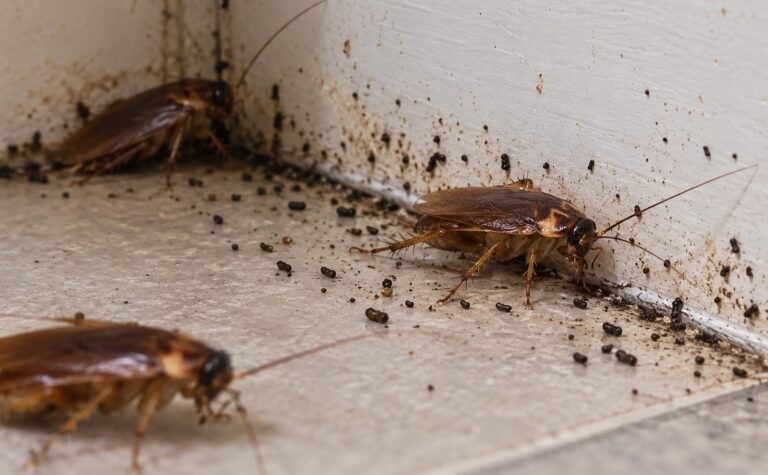
Cockroaches often travel along edges rather than crossing large open spaces. In areas with moisture, their movement can sometimes leave dark or irregular marks along surfaces. These may appear around wall edges, cabinets, plumbing areas, or other established travel routes. Like droppings, these marks can be mistaken for ordinary dirt.
Cleaning the area and monitoring whether the markings return can help determine whether there is ongoing activity. Pay particular attention when several warning signs appear in the same location.
Cockroach infestations are usually discovered visually, but homeowners occasionally notice subtle sounds coming from areas where insects are active. Faint rustling around cabinets, stored materials, or other quiet areas at night can have many possible causes, so sound alone is not a reliable way to diagnose a cockroach infestation.
It can still provide a reason to investigate. If you hear unexplained activity in the kitchen at night and have also found droppings or other evidence, inspect nearby harbourage areas.
A dead cockroach is sometimes dismissed because the insect is no longer alive. The more important question is how it got there. Finding one dead cockroach does not necessarily mean there is a large infestation, but repeated discoveries suggest cockroaches are present somewhere nearby.
Dead insects may appear beneath appliances, along baseboards, inside cabinets, in basements, or near utility areas. If you are finding dead cockroaches without using any recent pest control treatment, look for additional evidence. Even after treatment begins, dead cockroaches can continue appearing as insects leave harbourage areas and encounter treated surfaces or products.
Seeing very small cockroaches can be more concerning than finding one isolated adult. Young cockroaches generally indicate that eggs have hatched somewhere in or near the property. If you are finding insects of different sizes, the infestation may contain multiple developmental stages.
Nymphs can hide in extremely narrow spaces and may be particularly easy to overlook. Check cabinet hinges, appliance edges, cracks, plumbing openings, and other tight spaces. A population containing adults and nymphs usually requires more than simply killing the cockroaches that appear in the open.
Cockroaches need water, which makes sinks and plumbing areas important places to inspect. Look beneath kitchen and bathroom sinks for leaking pipes, condensation, standing water, or damp materials. Even a small plumbing leak can provide a dependable source of moisture. Cockroaches may also be attracted to water left in sinks, wet sponges, pet bowls, or moisture around appliances.
If you suspect an infestation, correcting leaks and reducing unnecessary moisture can make the environment less favourable. It will not necessarily eliminate an established population, but it removes one of the resources cockroaches rely on.
Pantries and cupboards provide both shelter and potential food. Inspect food storage areas for droppings, damaged packaging, or other unexplained insect activity. Open packages of cereal, flour, pet food, snacks, and other dry goods should be stored securely. Crumbs and spills should be cleaned from shelves rather than allowed to accumulate in corners.
Cockroaches do not require a large amount of food to survive. Small amounts of grease and food residue beneath appliances or inside cabinets can help support an infestation. This is one reason a home can appear clean while still providing enough resources for cockroaches.
Cockroaches are commonly associated with nighttime activity, so seeing one during the day may catch you by surprise. A daytime sighting does not automatically tell you how severe an infestation is. However, frequent daytime activity can be a warning sign worth investigating.
Cockroaches may appear during daylight when their hiding area is disturbed or when they are searching for resources. If you begin seeing cockroaches regularly during both the day and night, there may be significant activity somewhere nearby. Look for other evidence rather than judging the situation based on a single sighting.
Cockroaches can be introduced into homes through items brought inside. Cardboard boxes, deliveries, grocery packaging, used appliances, furniture, and stored belongings can provide hiding opportunities. Corrugated cardboard is particularly useful to pests because its layers create narrow protected spaces.
Avoid allowing unnecessary cardboard to accumulate, especially around kitchens and storage areas. When bringing used appliances or furniture indoors, inspect them carefully first. Appliances deserve particular attention because internal components can provide dark, warm hiding spaces.
Cockroach activity can be more complicated in apartments, condominiums, townhomes, and other attached properties. An individual unit may be clean and well maintained while cockroaches are entering from elsewhere in the building. Plumbing penetrations, utility openings, wall voids, and other shared structural spaces can provide routes between units.
If cockroaches repeatedly return after treatment, neighbouring activity may need to be considered. Property management should generally be informed when cockroaches are discovered in a multi-unit building. Treating affected areas together can be important when an infestation extends beyond one unit.
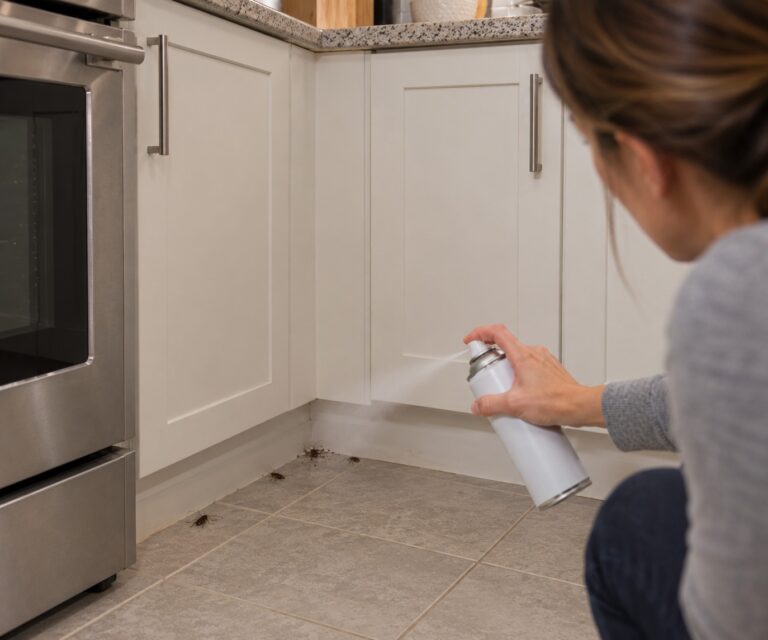
When homeowners first suspect cockroaches, many immediately begin spraying areas where insects have been seen. This can kill individual cockroaches, but it does not necessarily reveal the extent of the infestation. You may stop seeing insects temporarily while cockroaches remain hidden elsewhere.
Some products may also cause cockroaches to avoid treated areas, changing where activity appears. If you plan to arrange professional cockroach treatment, tell the technician about any products you have already applied. Knowing what was used and where it was placed can help when determining the treatment approach.
If you discover droppings, egg cases, nymphs, shed skins, or other evidence, start by cleaning up easily accessible food and moisture sources. Store food in sealed containers, clean crumbs and grease from kitchen surfaces, empty garbage regularly, and repair plumbing leaks. Avoid relying solely on repeatedly spraying visible insects.
The goal of cockroach control is to reach the population living in harbourage areas, not simply eliminate individual insects as they appear. An established infestation may require targeted treatment around appliances, cabinets, plumbing areas, baseboards, cracks, and crevices.
Professional cockroach treatment focuses on how the insects behave and where they are likely to hide. A technician can look for evidence around common harbourage areas and develop a treatment strategy based on the property.
Cockroach control may also require follow-up service. Eggs, young cockroaches, and hidden adults can make infestations difficult to resolve with a single application. Follow-up treatment allows continued activity to be assessed and addressed.
Preparation and sanitation are also important parts of the process. Homeowners may receive instructions before service so treatment areas are accessible and competing food sources are reduced. Following these instructions carefully helps support the treatment.
One of the biggest mistakes homeowners can make is assuming there is no problem simply because they rarely see live insects. Cockroaches are naturally secretive. Droppings behind the refrigerator, an egg case inside a cabinet, several tiny nymphs beneath the sink, or repeated dead cockroaches can all reveal an infestation before large numbers begin appearing in open areas. Paying attention to these early warning signs can help you respond before the population has more time to grow.
If you suspect cockroaches are hiding in your home, Avid Pest Services can help. Professional cockroach treatment targets common harbourage and travel areas, including spaces around appliances, cabinets, plumbing, baseboards, cracks, and crevices. Rather than focusing only on the cockroaches you can see, treatment is designed to address the hidden population responsible for continued activity.
If you’ve noticed droppings, egg cases, young cockroaches, shed skins, unexplained dead insects, or recurring activity in your kitchen or bathroom, it may be time to have the problem professionally treated.
Contact Avid Pest Services to book professional cockroach treatment. Addressing the infestation early can help prevent a hidden cockroach problem from becoming a much larger issue inside your home.
Looking for the best pest control service in Ontario? At Avid Pest Services, our exterminators are skilled to prevent any kind of pest from your residential and commercial area in a timely and efficient manner. Call today to get a free quote.
2023 Avid Pest Services. All Rights Reserved.
