
Finding a wasp nest around your home can be alarming, especially when it appears near a doorway, patio, deck, window, or another area your family regularly uses. During the summer, wasp colonies can grow quickly, and a nest that seemed small a few weeks ago may suddenly have dozens of wasps flying around it.
The most important thing to remember when you find a wasp nest is not to disturb it. Wasps can become highly defensive when they believe their colony is threatened, and many species are capable of stinging repeatedly. Even activities that seem harmless, such as mowing nearby, moving patio furniture, or trying to inspect the nest closely, can trigger defensive behaviour.
Knowing what to do if you find a wasp nest can help you avoid unnecessary stings and determine when professional wasp removal is the safest option.
Once you’ve identified a possible wasp nest, give it plenty of space. Wasps regularly travel between their nest and surrounding food sources. A few insects flying around your yard may not be particularly interested in you, but wasps close to their colony are much more likely to respond defensively.
Avoid standing directly underneath an exposed nest or positioning yourself near an entrance used by wasps. If the nest is near a door, walkway, deck, or patio, consider temporarily using another area until the problem has been addressed. Children and pets should also be kept away from the nesting area. The goal is to avoid giving the colony a reason to defend itself.
You don’t always need to see a physical nest to know you have a wasp problem. Many wasp colonies are completely hidden inside structures. Wasps may enter through small openings around soffits, siding, brick mortar, window frames, vents, rooflines, and exterior trim.
If you repeatedly see wasps flying toward the same spot, observe their activity from a safe distance. A steady stream of wasps entering and leaving a single opening is a strong sign that a nest may be hidden inside the structure. This information can also be helpful when you contact a pest control company. Being able to explain where the insects are entering can make it easier for the technician to locate the colony when they arrive.
Wasp nests generally fall into two categories from a homeowner’s perspective: exposed nests and concealed structural nests. An exposed nest is easy to see. Paper wasps commonly build their open, umbrella-shaped nests beneath soffits, deck railings, porch ceilings, window frames, sheds, fences, and other sheltered surfaces. Other wasp species may build larger enclosed paper nests in trees, shrubs, or protected areas around buildings.
A structural nest is different. The colony is located inside a wall, soffit, roof cavity, or another enclosed space. The only thing visible from outside may be a small hole with wasps continuously entering and leaving. Structural nests can be particularly difficult for homeowners to treat because the actual colony may be located some distance from the visible entrance.
If wasps are entering a small hole in your home, your first instinct may be to grab some caulking and seal it. This should generally wait until the colony has been treated and activity has stopped. Closing an active entrance does not necessarily eliminate the wasps already inside the wall or structural cavity. Instead, trapped insects may begin searching for another way out.
Depending on the location of the colony, this can potentially lead wasps deeper into the structure or toward interior living areas. The active colony should be dealt with first. Once the wasps have been eliminated and there is no longer activity around the entrance, the opening can be addressed to help prevent future access.
An exposed paper nest may look easy to remove, especially if it is relatively small. Trying to knock it down with a broom, stick, garden hose, or other object can immediately put you in the middle of defensive wasps.
Worker wasps protect the colony and may quickly respond when the nest is disturbed. Because wasps can sting multiple times, a single attempt to knock down the nest can result in several painful stings. The risk becomes greater later in summer when colonies are typically larger. Removing the visible paper structure also does not guarantee that all of the wasps have been eliminated.
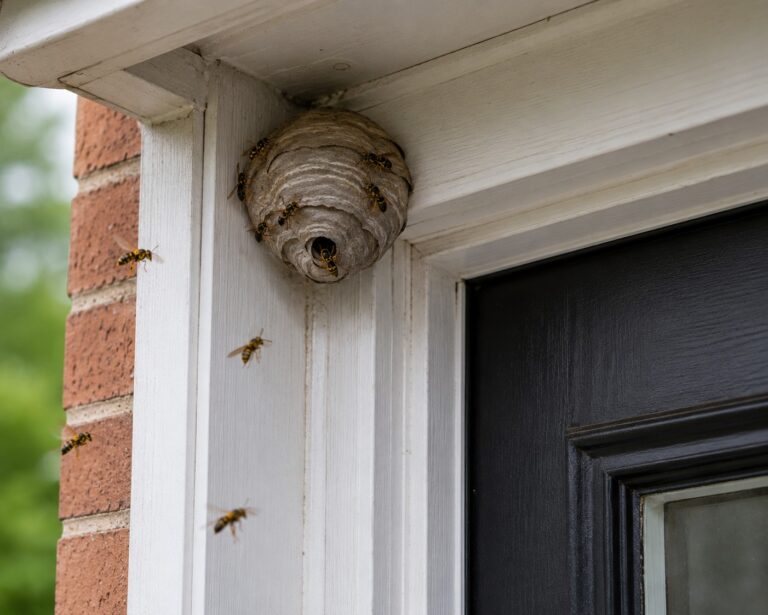
Hardware stores sell aerosol products designed to spray wasp nests from a distance. While these products are widely available, using them still requires getting close enough to an active colony to apply the treatment. The situation becomes considerably more difficult when the nest is high along a roofline, inside a wall, beneath a deck, or in another hard-to-reach location.
DIY sprays may also kill some visible insects without reaching the colony itself. If the nest is hidden behind siding or inside a soffit, spraying individual wasps outside the entrance may have little effect on the insects protected inside. There is also the possibility of provoking the colony during application. For established or difficult-to-access nests, professional wasp treatment is usually the safer and more reliable approach.
Wasps commonly build nests high around homes, particularly beneath rooflines, soffits, fascia boards, and second-storey windows. Trying to reach these locations from a ladder creates two hazards at once. Even if you’re normally comfortable using a ladder, having several wasps suddenly flying toward your face can cause an instinctive reaction. Losing your balance while attempting to move away from the insects can result in a serious fall.
A nest that cannot be safely reached from the ground is a good reason to contact a professional. Pest control technicians have protective equipment and application tools designed for treating nests in many difficult locations without requiring homeowners to put themselves at unnecessary risk.
The time of year can make a major difference in how much activity surrounds a nest. Most colonies begin with a single queen in the spring. She establishes the nest and raises the first generation of workers. Once those workers mature, they take over foraging, nest construction, and colony maintenance. The population continues increasing throughout the summer.
By late summer, established colonies may contain a substantial number of workers. More wasps are leaving the nest to forage, and more insects are available to defend it if disturbed. This is one reason homeowners often notice a dramatic increase in wasp activity during July and August. A nest that was barely noticeable in early summer may become much more difficult to approach later in the season.
Once you’ve found one nest, it can be helpful to look around your property for other signs of activity. You do not need to approach potential nesting locations closely. From a safe distance, pay attention to areas such as soffits, rooflines, window frames, sheds, decks, patio structures, fences, siding gaps, brick mortar, and exterior vents.
You may notice a repeating flight pattern that leads directly to another nesting location. Keep in mind that seeing several wasps around flowers or plants does not automatically mean there is a nest in that exact location. The key warning sign is repeated traffic into and out of a specific opening or sheltered area.
Nests located around frequently used areas should be addressed promptly. A colony beside your front door, patio entrance, deck, pool, children’s play area, or outdoor seating space creates more opportunities for accidental encounters. You don’t necessarily need to disturb a nest for a sting to occur. Simply walking through the wasps’ regular flight path can bring people into close contact with workers moving between the colony and food sources.
Until the nest has been treated, limit activity in the immediate area where possible. Food and sugary beverages should also be kept covered outdoors because they can attract additional foraging wasps to patios and decks.
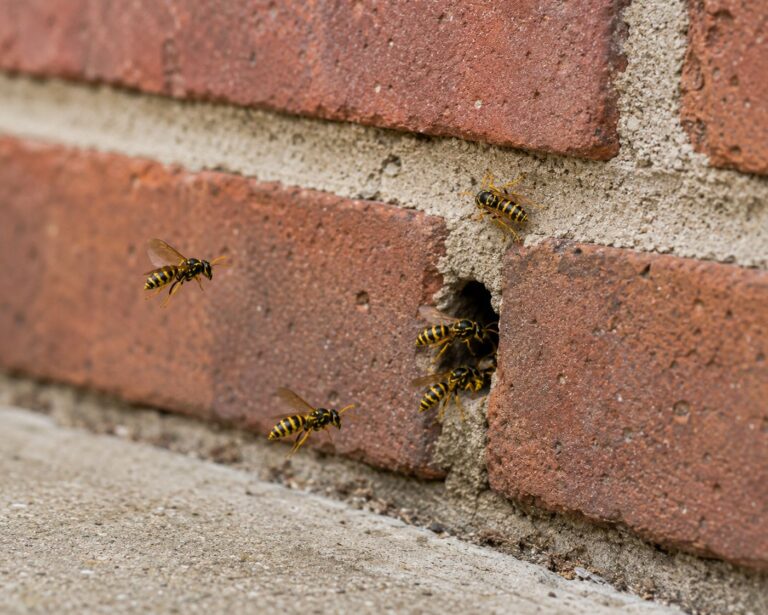
Sometimes homeowners know they have a wasp problem but cannot find the colony. This is common with structural nests. You may see wasps around a particular window, notice activity along the roofline, or repeatedly find insects entering a tiny opening between bricks. The actual nest could be hidden well inside the structure.
Avoid opening walls or removing exterior materials to search for it yourself. Instead, pay attention to where the wasps enter and exit. A professional technician can use those activity patterns to determine where treatment should be applied.
Not every wasp seen outdoors requires pest control. Wasps are part of the natural ecosystem and help control populations of other insects. Location is what often determines whether a colony becomes a problem. A nest far from the home in an area where people rarely travel may pose little immediate concern. A nest directly above a patio door is a very different situation.
Consider how close the colony is to people, pets, walkways, entrances, recreational spaces, and regular property maintenance. If avoiding the nest is difficult, professional removal is generally the safer option.
After an active colony has been eliminated, there are steps homeowners can take to reduce future nesting opportunities. Inspect your home’s exterior periodically during spring and early summer. Look beneath soffits, porch ceilings, deck railings, sheds, and other protected surfaces for newly developing nests.
Keep garbage containers closed and clean up food or sugary spills around outdoor eating areas. Fallen fruit should also be removed from beneath fruit trees. Gaps around exterior building materials can sometimes provide access to hidden nesting locations. Once you are certain there is no active colony inside, appropriate openings can be repaired or sealed. Regular exterior maintenance will not guarantee that wasps never return, but it can make your property less inviting.
If you discover an active wasp nest around your home, Avid Pest Services can help. Professional treatment removes the need to approach an active colony yourself. Whether the nest is exposed beneath a soffit or deck, located around a window frame, or hidden inside a structural opening, the treatment can be selected based on where the wasps are nesting and how they are accessing the area.
Structural wasp problems require particular attention because the visible hole may only be an entrance to a larger colony hidden inside the building. Treating the source of the activity is more effective than simply spraying individual wasps as they appear. Professional service also means you do not have to climb a ladder, disturb the nest, or stand near defensive insects while attempting treatment.
If you’ve found a wasp nest, the safest first step is simple: keep your distance and avoid disturbing it. Watch the area from a safe location to determine where the wasps are travelling, keep children and pets away, and avoid sealing active entry points until the colony has been properly treated.
For nests around soffits, windows, decks, patios, brick walls, siding, rooflines, and other areas of your home, professional treatment can help eliminate the colony without the risks associated with DIY removal. Contact Avid Pest Services to book professional wasp nest treatment. Our team can address active wasp colonies and help you get back to enjoying your home and outdoor spaces without unwanted wasp activity.
Looking for the best pest control service in Ontario? At Avid Pest Services, our exterminators are skilled to prevent any kind of pest from your residential and commercial area in a timely and efficient manner. Call today to get a free quote.
2023 Avid Pest Services. All Rights Reserved.