
Wasps are one of the most common summer pests homeowners encounter. While seeing a single wasp flying through your yard isn’t always cause for concern, repeated activity around the same area often means a nest is nearby. The earlier you identify a nest, the easier and safer it is to deal with before the colony grows.
Many homeowners don’t notice wasp nests until they become quite large or until someone is stung while mowing the lawn, relaxing on the patio, or performing routine home maintenance. Knowing where wasps prefer to build nests and recognizing the warning signs can help you avoid dangerous encounters.
If you’ve noticed increased wasp activity around your property, here’s what you should know about where they build nests and how to spot them before they become a larger problem.
Residential properties provide everything wasps need to establish successful colonies. Homes offer countless sheltered locations that protect nests from wind and rain. Gardens provide flowering plants, while outdoor dining areas, garbage bins, compost piles, and fruit trees offer reliable food sources.
In the spring, a single fertilized queen begins building a small paper nest. She lays the first generation of eggs and cares for them until worker wasps emerge. Once workers take over nest expansion and food collection, the colony begins growing rapidly. By mid to late summer, some nests contain hundreds or even thousands of wasps depending on the species.
One of the most common nesting locations is beneath roof overhangs. Paper wasps prefer sheltered areas that remain protected from direct rainfall while still providing easy access to the outdoors. The underside of soffits, fascia boards, porch ceilings, and roof eaves often become ideal nesting sites.
These nests usually begin as small umbrella-shaped structures attached by a narrow stalk. As the colony grows, additional paper cells are added. Homeowners often discover these nests while cleaning gutters, painting trim, or installing holiday decorations.
Outdoor living spaces frequently attract wasps. Deck joists, patio covers, pergolas, railings, and outdoor furniture provide protected corners where queens can begin building new colonies.
Because these areas receive regular human activity, nests can become dangerous once they reach moderate size. If you notice wasps repeatedly flying beneath your deck or patio roof, there is a good chance a nest is hidden nearby.
Not every wasp nest is visible. Yellowjackets commonly build nests inside wall voids after entering through surprisingly small openings around siding, vents, brick gaps, utility penetrations, or damaged trim. These concealed nests can become quite large before homeowners realize they’re present.
One common sign is a steady stream of wasps entering and leaving the exact same crack throughout the day. Unlike exposed paper wasp nests, hidden colonies require specialized treatment to eliminate safely.
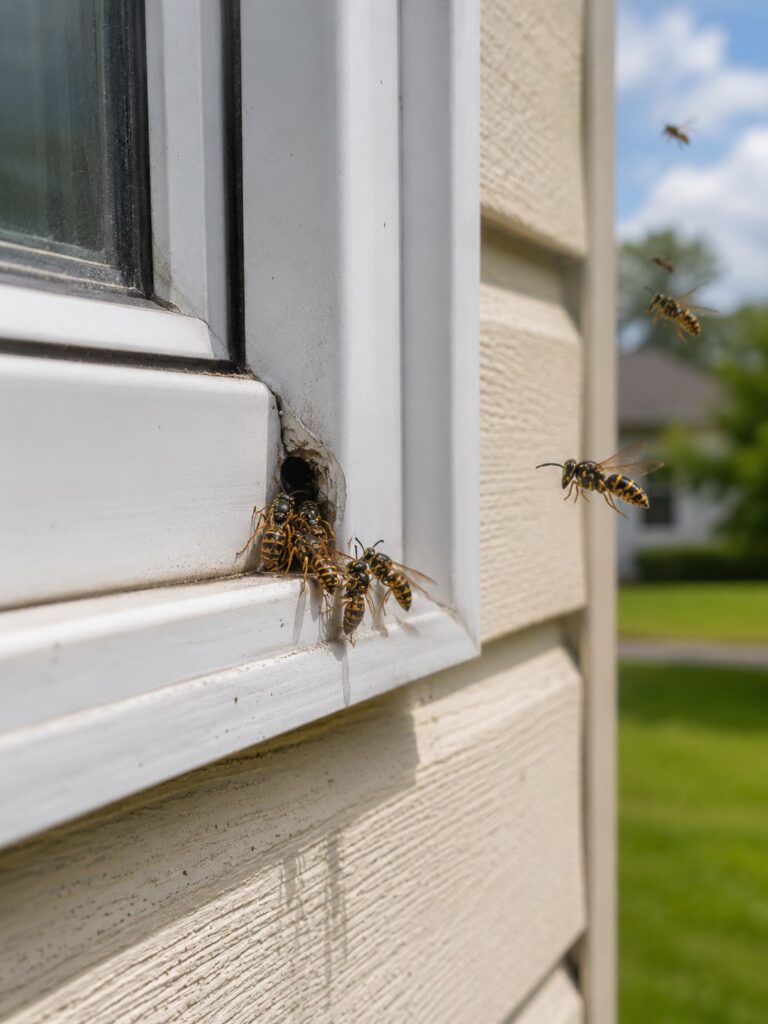
Decorative shutters and loose siding create narrow protected spaces that many wasps find attractive. Because these locations are rarely disturbed, colonies can grow unnoticed for weeks.
Homeowners may first notice wasps flying near windows or gathering around one section of the home without immediately realizing a nest exists behind the exterior materials. Routine inspections around the outside of the house can help detect these nests before they become established.
Storage buildings often contain ideal nesting locations. Roof rafters, wall corners, shelving, windows, and door frames all provide protected attachment points for paper wasps.
Because sheds are frequently opened and closed throughout the summer, disturbing an active nest can quickly provoke defensive behaviour. Checking the upper corners of a shed before beginning yard work is always a good idea.
The shaded space beneath a deck offers protection from weather while remaining relatively undisturbed. Paper wasps sometimes attach nests directly to support beams or joists. Yellowjackets may also build underground nests beneath decks if suitable soil conditions exist. If wasps appear to disappear beneath your deck repeatedly, avoid investigating too closely until the area has been professionally inspected.
Some wasp species build nests away from buildings altogether. Bald-faced hornets commonly construct large football-shaped paper nests suspended from tree branches or shrubs.
These nests become increasingly visible as they grow throughout the summer. Although they may appear peaceful from a distance, disturbing a hornet nest can trigger an aggressive defensive response.
Yellowjackets frequently establish colonies below ground. Abandoned rodent burrows, landscape voids, retaining wall cavities, and loose soil all provide excellent nesting opportunities.
These nests are especially hazardous because they often remain completely hidden until someone accidentally steps near the entrance while mowing or gardening. A sudden burst of numerous wasps emerging from the ground usually indicates an underground colony.
Small gaps around windows and doors sometimes provide access to concealed nesting areas. Wasps may build nests inside wall cavities and travel through tiny openings around window frames, patio doors, or trim boards.
If you regularly notice wasps gathering near one particular window or door, it is worth investigating the surrounding exterior for possible entry points. Ignoring this activity can allow the colony to continue growing inside the structure.
Sometimes the nest itself isn’t immediately visible. Fortunately, wasps often reveal its location through their behaviour. Watch for these common warning signs:
Even if you cannot locate the nest itself, repeated traffic almost always indicates an active colony nearby.
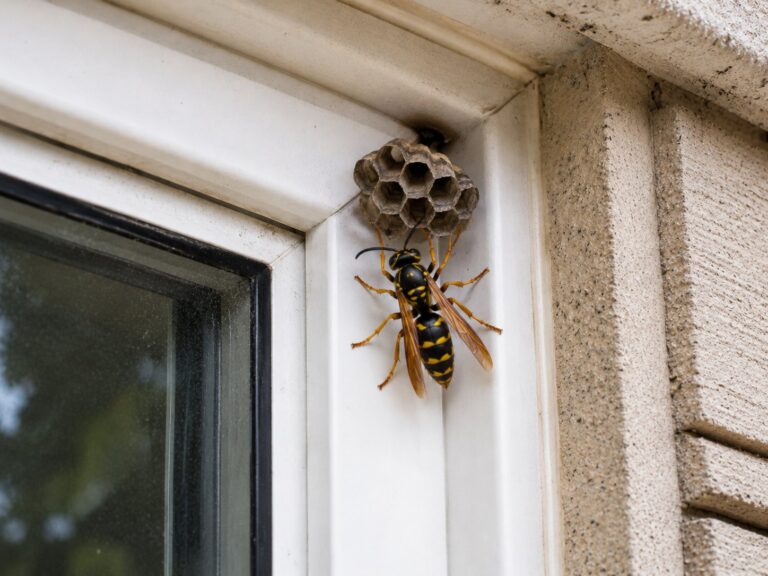
Attempting to remove an active wasp nest yourself carries significant risks. Unlike honeybees, wasps can sting repeatedly. When they perceive a threat to their colony, they release alarm pheromones that quickly attract additional workers to defend the nest. A small nest containing only a few wasps may seem manageable, but mature colonies can contain hundreds of defensive insects.
Store-bought sprays also have limitations. Visible nests may be partially treated, while hidden colonies inside walls often remain active because the product cannot reach the entire nest. Improper treatment may even drive surviving wasps deeper into the structure or encourage them to seek alternative exits into living spaces.
While no prevention strategy is guaranteed, several simple maintenance steps can make your property less attractive. Inspect your home every spring for newly forming nests beneath soffits, porch ceilings, railings, decks, and outdoor furniture. Early nests are much easier to deal with before worker populations expand.
Seal cracks around siding, windows, utility penetrations, and vents where practical. Keep garbage containers tightly closed, clean outdoor eating areas regularly, and promptly remove fallen fruit from trees. Pruning overgrown vegetation around the home also reduces sheltered areas that queens may use when beginning new colonies.
At Avid Pest Services, we provide professional wasp nest removal for both exposed and concealed colonies. Our technicians use professional treatment methods designed to eliminate the entire colony safely.
Whether wasps are nesting beneath your soffits, inside wall cavities, under a deck, around a patio, or high along your roofline, we have the equipment and experience to remove the infestation efficiently. Once the colony has been eliminated, we can also provide recommendations to help reduce the chances of future nesting around your property.
If you’ve noticed wasps flying around your home every day or have discovered an active nest, don’t wait for the colony to grow larger. Early treatment is safer, more effective, and helps reduce the risk of painful stings for your family and pets.
Avid Pest Services provides professional wasp nest removal for homeowners dealing with paper wasps, yellowjackets, hornets, and other stinging insects. Our experienced technicians can safely eliminate active colonies and help keep your home protected throughout the summer.
Reach out to Avid Pest Services today to schedule your professional wasp removal service and enjoy a safer, wasp-free property all season long.
Looking for the best pest control service in Ontario? At Avid Pest Services, our exterminators are skilled to prevent any kind of pest from your residential and commercial area in a timely and efficient manner. Call today to get a free quote.
2023 Avid Pest Services. All Rights Reserved.
