
Wasps are a common sight throughout the warmer months, but some properties seem to attract far more activity than others. You might notice wasps hovering around your patio, investigating garbage bins, flying beneath the soffits, or repeatedly disappearing into a small opening along the exterior of your home. When this happens, there is usually something nearby providing food, water, shelter, or a suitable nesting location.
Understanding what attracts wasps to your property can help you reduce conditions that encourage them to stick around. It can also help you recognize the difference between occasional foraging activity and a potentially active wasp nest.
Wasps play an important role outdoors by feeding on other insects and contributing to the ecosystem. Problems develop when they establish colonies close to doors, patios, decks, walkways, play areas, and other spaces used by people. Here are some of the most common reasons wasps may be attracted to your home and yard.
Wasps spend a significant amount of time searching for food. Residential properties can provide an abundance of it, particularly during summer. Their dietary preferences can also change as the colony develops. Earlier in the season, worker wasps commonly hunt other insects to provide protein for developing larvae. Later in summer, adult wasps become increasingly interested in sugary foods.
This is why wasps often seem to appear whenever people start eating outside. A patio table covered with fruit, soft drinks, desserts, meat, or other food can quickly attract nearby foraging wasps. Even small spills and crumbs can provide enough scent to get their attention. Keeping food covered and cleaning outdoor dining areas after use can make patios less attractive to them.
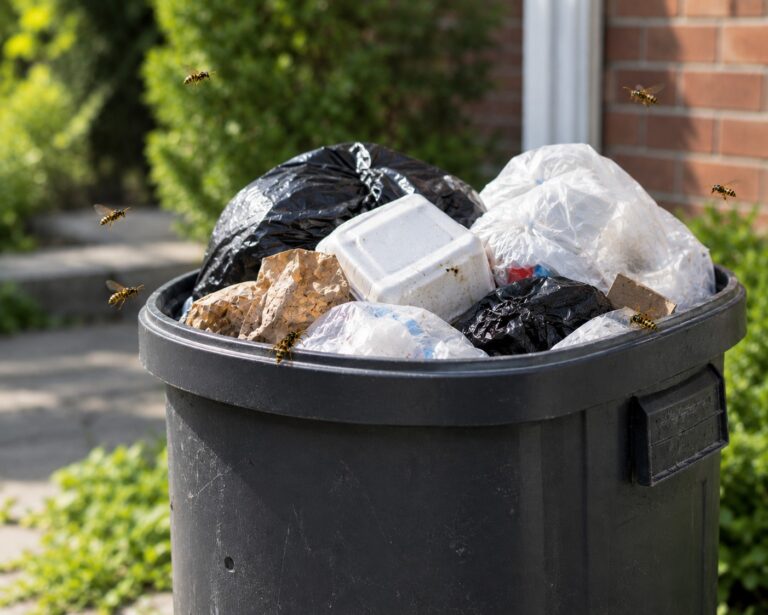
Garbage containers provide many of the foods wasps search for, all concentrated in one location. Food scraps, meat packaging, fruit, empty drink containers, and other organic waste can attract wasps throughout the summer. Recycling bins can be particularly appealing when pop cans, juice containers, and other sweet beverage containers still contain residue.
Keep outdoor garbage and recycling containers closed whenever possible. Rinsing beverage containers before placing them in recycling and periodically cleaning the bins can also reduce lingering food odours. If you regularly notice wasps flying around your garbage area, food residue may be one of the reasons they keep returning.
Anyone who has eaten outside in August has probably experienced a wasp showing an unwanted interest in their drink. Soft drinks, juice, sweetened coffee, sports drinks, and other sugary beverages can become highly attractive to foraging wasps. Open cans deserve particular caution because a wasp can crawl inside without being noticed.
During outdoor meals, use cups where you can easily see the contents and keep beverages covered when possible. Clean spills promptly rather than allowing sugary residue to remain on patio furniture or decking. This becomes increasingly important toward the end of summer when natural food sources begin changing and wasp colonies have reached much larger populations.
Fruit trees can create another major food source. Apples, pears, peaches, plums, and other fruits that fall and begin ripening or fermenting on the ground can attract numerous insects, including wasps. The problem can become particularly noticeable in late summer when fruit is plentiful.
Regularly picking up fallen fruit can reduce this attraction. If you have several fruit trees, checking beneath them every few days during peak season can make a noticeable difference. Gardens containing ripe or damaged fruit may create similar conditions.
Not everything that attracts wasps is sweet. Many wasp species are predators and actively hunt other insects. Caterpillars, flies, spiders, and other small pests may be captured and brought back to the colony to feed developing larvae. A property with abundant insect activity can therefore provide an excellent hunting ground.
Outdoor lights are one example. Lights can attract numerous flying insects after dark, creating a concentrated food source around the building. Although eliminating every insect around a property is neither realistic nor necessary, excessive pest activity may contribute to the conditions that keep wasps nearby.
Food may bring wasps onto your property, but shelter can convince them to stay. Homes contain countless protected areas suitable for nest construction. Depending on the species, wasps may establish nests beneath soffits, around rooflines, under decks, inside sheds, near window frames, behind siding, within wall cavities, or around other sheltered structural features.
Paper wasps often select exposed but protected surfaces where their nests remain sheltered from rain. Other wasps may take advantage of existing holes and gaps that lead inside structural cavities. This is why seeing wasps repeatedly entering a small opening around your house should not be ignored.
Siding can create protected spaces where wasps are difficult to see. A small opening beneath a piece of siding may be enough for wasps to access a sheltered void. From outside, homeowners may only see workers repeatedly disappearing through the same gap. The actual nest may be completely hidden.
If you notice regular traffic beneath siding, avoid sealing the opening while the colony is active. Wasps trapped inside may search for another exit, potentially creating additional problems. The colony should be treated first. Once activity has stopped, appropriate repairs or sealing can be considered.
Brick homes can also provide opportunities for structural nesting. Over time, mortar may crack, deteriorate, or develop small openings. Wasps can investigate these spaces and, when the opening leads to a suitable void, potentially establish a colony inside. You may never see the nest itself.
Instead, the main warning sign is repeated activity at one specific opening. Wasps may arrive, crawl into the hole, and emerge again throughout the day. Do not simply fill an opening when wasps are actively using it. Have the infestation addressed before repairing the mortar.
The upper portions of a house provide excellent protection from weather and disturbance. Soffits, fascia boards, roof edges, eaves, and other architectural features can offer sheltered areas where wasps establish nests. These locations also tend to be relatively quiet.
A small spring nest may go unnoticed because homeowners rarely inspect the underside of their roofline. By the time heavy activity becomes obvious later in summer, the colony may have been developing for months. Watching for repeated wasp traffic around your roofline can help identify concealed activity earlier.
Wasps do not need to nest directly on your house to become a problem. Backyard structures can offer equally suitable locations. The underside of a deck is protected from direct sunlight and rain. Fence posts and railings provide sheltered corners. Sheds offer eaves, cracks, wall cavities, and quiet interior spaces.
Patio furniture, play structures, gazebos, and outdoor storage areas can also provide nesting opportunities. During spring and early summer, periodically checking these areas can help you spot small nests before they become established colonies.
Like other animals, wasps require access to water. Swimming pools, birdbaths, fountains, pet water bowls, dripping faucets, irrigation systems, and standing water can all provide convenient drinking sources. You do not need to remove every water source from your property, but unnecessary standing water should be addressed.
Repair leaking outdoor faucets, empty containers that collect rainwater, and keep drainage systems working properly. Reducing unnecessary moisture can also help discourage other pests that may serve as food for wasps.
A healthy garden is full of insect activity, so seeing an occasional wasp around flowering plants is not necessarily a sign of an infestation. Wasps may visit flowers for nectar or hunt insects living among the plants. Problems are more likely when you notice a consistent flight path between the garden and a particular location on your home.
For example, wasps feeding around flowers and then repeatedly flying toward a soffit opening could indicate that a colony is nearby. The presence of wasps around flowers alone is usually less concerning than concentrated activity around a structural opening.
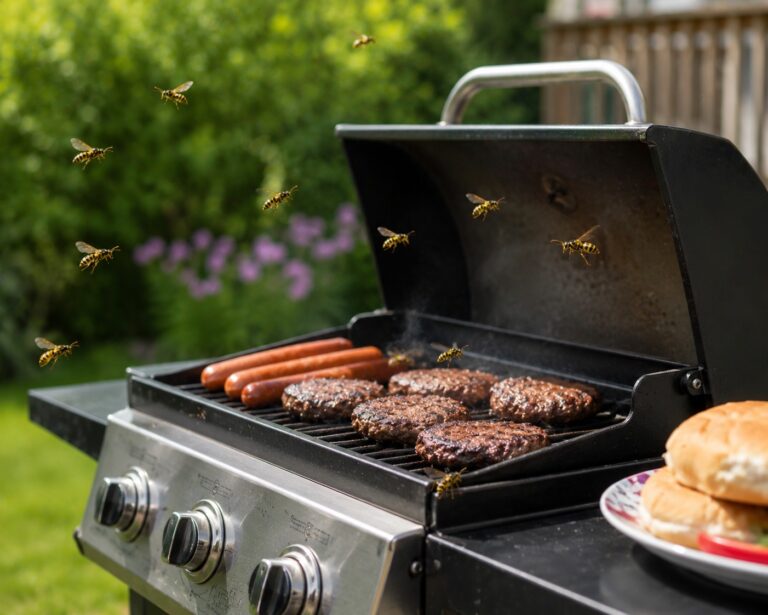
Barbecues create several things wasps find attractive. Meat and other protein-rich foods may draw them in, while sauces, soft drinks, fruit, and desserts provide sugar. Food residue left on grills, tables, or patio surfaces can continue attracting insects long after the meal is finished. Clean grills and outdoor dining surfaces regularly.
Cover food while it is outside and return leftovers indoors once everyone has finished eating. Garbage from outdoor meals should also be placed in a sealed container promptly. These simple habits can make your patio less rewarding for foraging wasps.
Many homeowners notice that wasps become much more persistent in August and early fall. This is partly because colonies have had the entire summer to grow. A nest that began with one queen in spring may contain a large population of workers later in the season. More workers means more wasps searching your property for food.
Changes inside the colony also affect their behaviour. As the season progresses, workers become increasingly interested in readily available sources of sugar. This is why patios, garbage bins, fruit trees, and outdoor gatherings can suddenly experience much heavier wasp activity late in summer.
Seeing one or two wasps does not necessarily mean you have a nest. Wasps can travel while foraging, so an occasional visitor may have come from somewhere else in the neighbourhood. Repeated activity is more significant.
Watch from a safe distance and look for multiple wasps following the same route. If they repeatedly disappear beneath siding, through a hole in mortar, into a soffit, under a deck, or around a window frame, there may be an active colony inside or nearby. Do not put your face near the opening or attempt to probe it. Once you’ve identified the general location, a pest control professional can determine how the activity should be addressed.
There is no way to make an outdoor property completely wasp-proof, but good maintenance can reduce some of the conditions that attract them. Keep garbage and recycling containers closed, clean food spills promptly, remove fallen fruit, and avoid leaving outdoor food uncovered.
Inspect sheltered areas around the house periodically during the warmer months. Catching a newly forming exposed nest early can prevent it from becoming a much larger late-summer problem. You can also maintain your home’s exterior by repairing damaged siding, deteriorating mortar, and other potential access points. Just remember that openings being actively used by wasps should not be sealed until the colony has been treated.
Professional wasp treatment is worth considering when you discover an established nest or notice concentrated activity around part of your home. Nests located near doors, patios, walkways, children’s play areas, or other frequently used spaces create an increased chance of accidental encounters.
Structural nests also require particular care because the colony may be hidden inside the building. Trying to spray individual insects outside an entrance may not reach the nest. Sealing the opening too early can also cause wasps to search for another way out. Professional treatment focuses on addressing the active colony rather than simply dealing with the individual wasps you can see.
If wasps have established a nest around your property, Avid Pest Services can help. Our professional wasp treatments are designed to address colonies around common nesting locations, including soffits, rooflines, decks, window frames, siding, brick walls, sheds, and other areas around residential properties.
For structural infestations, we focus on the area where wasps are actively entering and exiting so the colony can be properly treated. Homeowners should avoid sealing these openings until the wasp activity has stopped.
Whether you’ve found a visible paper nest or you’re watching wasps disappear into a tiny opening in your home’s exterior, dealing with the source of the infestation can help prevent continued activity around your property.
Food, sugary drinks, garbage, fallen fruit, water, other insects, and sheltered nesting areas can all attract wasps to residential properties. While reducing these attractants can help with prevention, an established colony usually requires more than simply removing nearby food sources. If you’re seeing frequent wasp activity around your home, watch for repeated flight patterns and active entry points without getting too close.
Contact Avid Pest Services today to book your professional wasp treatment. We can help address active colonies around your home so you can spend more time enjoying your yard, patio, and outdoor spaces with less unwanted wasp activity.
Looking for the best pest control service in Ontario? At Avid Pest Services, our exterminators are skilled to prevent any kind of pest from your residential and commercial area in a timely and efficient manner. Call today to get a free quote.
2023 Avid Pest Services. All Rights Reserved.