
Ant infestations are one of the most common pest problems homeowners face, but not all ants are the same. Two of the most frequently encountered species are carpenter ants and pavement ants. While both can show up in and around your home, they behave very differently and require different approaches to control.
Understanding the difference between carpenter ants and pavement ants is essential. Misidentifying the species can lead to ineffective treatment, allowing the infestation to continue or even get worse over time.
When homeowners see ants in the kitchen or along the foundation, the first instinct is often to treat them all the same. The issue is that carpenter ants and pavement ants have completely different nesting habits and risks.
Pavement ants are mostly a nuisance pest. They are attracted to food and often nest outdoors. Carpenter ants, on the other hand, can cause structural damage because they nest inside wood. Treating carpenter ants like pavement ants can allow them to keep damaging your home unnoticed. That’s why identifying the species early is so important.
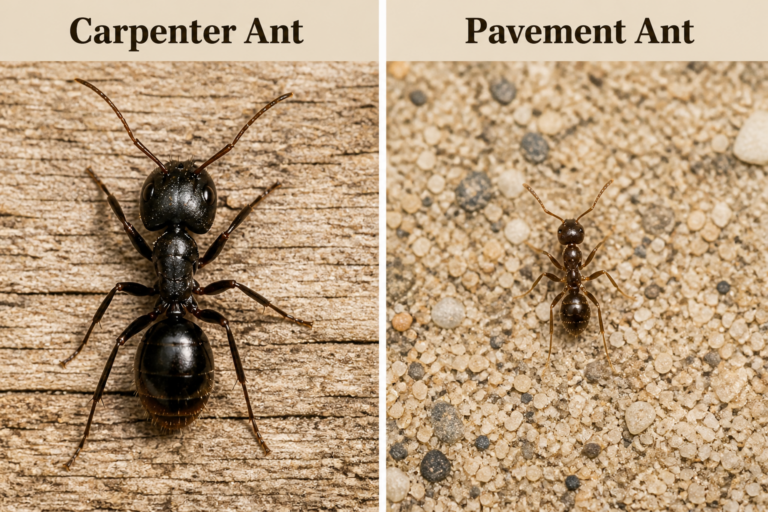
One of the easiest ways to tell carpenter ants and pavement ants apart is by their size. Carpenter ants are much larger. They typically range from about a quarter inch up to half an inch in length. Their bodies are solid black, although some may appear reddish or dark brown depending on the species. They have a smooth, evenly rounded thorax when viewed from the side.
Pavement ants are significantly smaller. Most are only a few millimeters long, often appearing dark brown or black. Their bodies have a more segmented look, and under closer inspection, you may notice fine lines or ridges on their surface. If the ants you’re seeing are noticeably large and easy to spot individually, there’s a strong chance you’re dealing with carpenter ants.
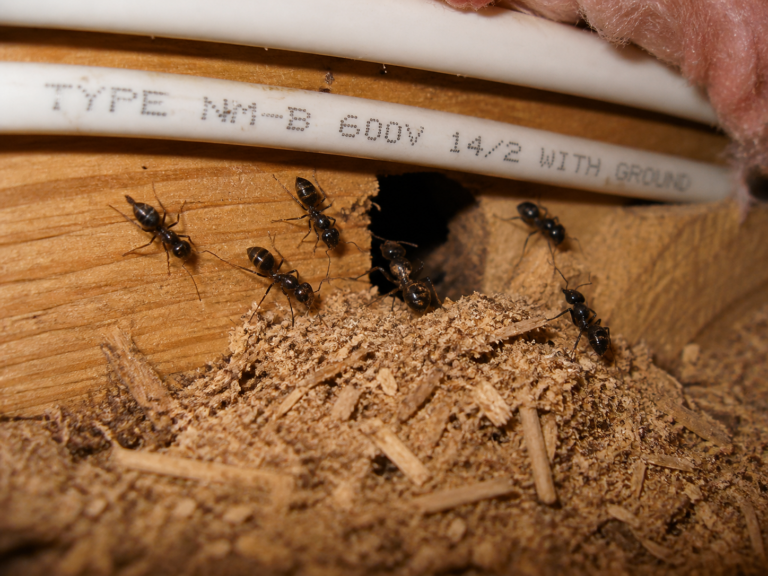
The nesting location is one of the biggest differences between these two types of ants. Carpenter ants prefer to nest in wood. This could be inside wall voids, attic beams, window frames, or even damp or decaying wood around your home. They do not eat wood, but they tunnel through it to create galleries where they live and raise their young. These nests can expand over time, especially if moisture issues are present. Areas with water damage or high humidity are particularly attractive to carpenter ants.
Pavement ants, as their name suggests, typically nest outdoors. They are commonly found under sidewalks, driveways, patios, and along foundations. You may notice small piles of sand or soil near cracks, which are signs of their nesting activity. While pavement ants can enter your home, they usually return to outdoor nests rather than establishing colonies inside structural wood.
Each type of ant leaves behind different clues that can help you identify what you’re dealing with. Carpenter ants often create small piles of wood shavings, sometimes mixed with insect parts. This material, known as frass, is pushed out of their tunnels as they excavate wood. Finding this near baseboards, windows, or in basements can be a strong indicator of carpenter ant activity. You may also hear faint rustling sounds inside walls, especially at night when carpenter ants are most active.
Pavement ants are more likely to be seen in visible trails. They form long lines as they travel between their nest and food sources. These trails are commonly found along baseboards, countertops, and exterior walls. Unlike carpenter ants, pavement ants do not produce wood debris, so the signs are usually limited to visible activity and small dirt piles outdoors.
Both carpenter ants and pavement ants are drawn to food, but their reasons for entering your home can differ. Pavement ants are primarily foragers. They enter homes in search of food, especially sugary or greasy substances. Kitchens, pantries, and dining areas are common hotspots.
Carpenter ants are also attracted to food, but their presence is often linked to nesting opportunities. Moist or damaged wood provides the ideal environment for them to establish a colony. While they may forage in your kitchen, the main concern is usually hidden inside walls or structural areas. If you’re seeing ants but can’t find a clear food source, there’s a higher chance you may be dealing with carpenter ants nesting nearby.
Carpenter ants are generally considered the more serious of the two. While they do not pose a direct health threat like some pests, their ability to damage wood structures makes them a concern for homeowners. Over time, their tunneling can weaken wooden components of your home. This damage is often hidden, which means it can go unnoticed until it becomes more significant.
Pavement ants, on the other hand, are mostly a nuisance. They can contaminate food and become frustrating due to their numbers, but they do not cause structural damage.
Many homeowners try to deal with ants using sprays or store-bought solutions. While these may reduce visible activity, they rarely solve the problem completely. Spraying pavement ants may temporarily break up trails, but if the colony remains intact outdoors, they will return.
With carpenter ants, spraying can actually make the problem worse. It may kill some ants but fail to reach the nest, allowing the colony to continue growing inside your home. In both cases, treating only the ants you see does not address the source of the infestation.
Effective ant control starts with proper identification. At AVID Pest, our team will help to determine whether you’re dealing with carpenter ants or pavement ants. Once the species is identified, we use targeted treatments designed to eliminate the colony. For pavement ants, this often involves baiting and exterior treatments to address the source. For carpenter ants, treatment focuses on locating and eliminating the nest, as well as addressing conditions that may be attracting them, such as moisture or damaged wood. This approach ensures that the problem is handled at its root rather than just reducing surface activity.
Prevention plays a key role in keeping ants from returning. Maintaining a clean kitchen, sealing food properly, and addressing moisture issues can reduce the chances of attracting ants. Repairing cracks in foundations and sealing entry points can also help limit access.
For carpenter ants, keeping wood dry and in good condition is especially important. Fixing leaks and replacing damaged wood can make your home less appealing to them. Regular inspections can catch early signs of activity before they become larger infestations.
If you’re dealing with ants and aren’t sure what type you have, it’s best to address the problem before it gets worse. Proper identification and targeted treatment can save time, prevent damage, and eliminate ongoing frustration. AVID Pest offers professional ant control designed to handle both carpenter ants and pavement ants effectively. Our team will identify the issue, treat the infestation, and help you protect your home moving forward.
Contact AVID Pest today to book your service and take control of your ant problem with confidence.
Looking for the best pest control service in Ontario? At Avid Pest Services, our exterminators are skilled to prevent any kind of pest from your residential and commercial area in a timely and efficient manner. Call today to get a free quote.
2023 Avid Pest Services. All Rights Reserved.
